Creating a desk setup in a small apartment can feel challenging, especially when you do not have a separate office room. But a good workspace does not need to be large. It only needs to be practical, comfortable, and easy to keep organized.
With the right desk, storage, lighting, and layout, even a small corner can become a useful place to work, study, plan, or manage everyday tasks.
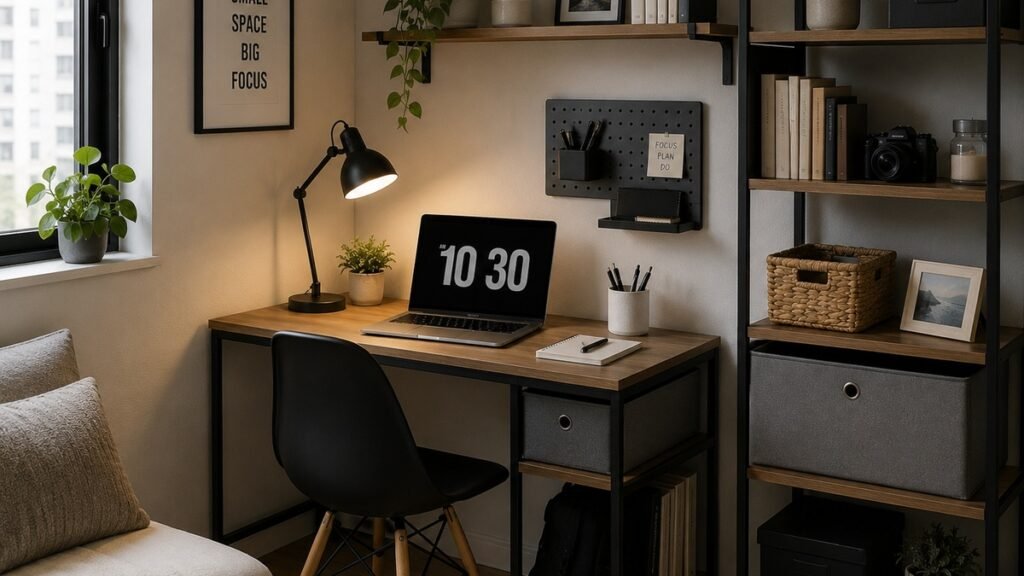
These desk setup ideas for small apartments will help you create a workspace that fits your home without making it feel crowded.
1. Use a Small Writing Desk
A small writing desk is one of the easiest options for a small apartment. It gives you a dedicated work surface without taking up too much space.
A compact writing desk works well for:
- Laptop work
- Studying
- Writing
- Planning
- Basic home admin tasks
Look for a desk that is wide enough for your laptop, notebook, and lamp, but not so large that it overwhelms the room.
If you are building your first workspace, start with our small home office setup checklist to plan the basics before buying more items.
2. Try a Wall-Mounted Desk
A wall-mounted desk can be useful when floor space is limited. Some wall desks fold down when needed and fold back up when not in use.
This type of setup can work well in:
- Studio apartments
- Small bedrooms
- Hallways
- Living room corners
- Shared spaces
Before installing a wall-mounted desk, make sure it is appropriate for your wall, lease rules, and daily use. If you rent, check whether wall installation is allowed.
A wall-mounted desk is best for light work, such as laptop tasks, writing, reading, or planning.
3. Use a Corner Desk Setup
Corners are often underused in small apartments. A corner desk setup can turn an empty corner into a practical workspace without using the center of the room.
A corner desk can help you:
- Use awkward space more efficiently
- Keep the workspace separate from the rest of the room
- Create a quieter work area
- Add storage above or beside the desk
You can use a small corner desk, an L-shaped desk, or a regular compact desk placed into a corner.
Keep the corner setup simple. Too many shelves, decorations, or supplies can make the area feel heavy.
4. Place a Desk Behind the Sofa
If your living room is small, the area behind the sofa may be useful. A narrow desk or console table behind the sofa can become a simple work surface.
This setup works best when:
- The sofa is not directly against the wall
- There is enough room for a chair
- The desk is narrow enough to fit comfortably
- Cables can be managed safely
A behind-the-sofa desk can be helpful in studio apartments or open-plan spaces where a traditional home office area is not available.
Keep this setup minimal so the living room does not feel crowded.
5. Use a Bedroom Desk Corner
A bedroom desk corner can work well if you need a quiet place to focus. This is common in small apartments where the bedroom is the only private room.
To make a bedroom desk setup work, try to:
- Keep the desk surface clear
- Use soft lighting
- Store work items in one area
- Avoid letting papers spread onto the bed
- Reset the desk at the end of the day
If possible, create a small visual boundary between work and rest. This can be done with a rug, shelf, lamp, or simply by keeping the desk in one defined corner.
A bedroom workspace should be useful without making the room feel like an office all the time.
6. Choose a Desk With Built-In Storage
Storage is important in a small apartment, but extra storage furniture can take up valuable space. A desk with built-in storage can help solve this problem.
Useful built-in storage features include:
- Small drawers
- Side shelves
- A keyboard tray
- Open cubbies
- A lower shelf
- A hutch or upper shelf
Choose storage based on what you actually use. If you mostly work on a laptop, a few small drawers may be enough. If you handle papers often, a file drawer or shelf may be more useful.
For more apartment-friendly storage options, see our small apartment storage ideas.
7. Keep the Desk Surface Minimal
A small apartment desk can feel crowded very quickly. The easiest way to avoid this is to keep the surface minimal.
Good items to keep on the desk include:
- Laptop or monitor
- Notebook or planner
- One or two pens
- Desk lamp
- Mouse and keyboard if needed
- Small tray for daily items
Items that may not need to stay on the desk include:
- Extra notebooks
- Backup pens
- Old receipts
- Random cables
- Large decorations
- Unfinished paper piles
If your desk often feels crowded, use our guide on how to organize a small desk to create a cleaner system.
8. Use a Monitor Stand for Extra Space
A monitor stand can create extra storage space without taking up more floor area. It lifts your screen and gives you room underneath for small items.
You can use the space under a monitor stand for:
- Keyboard
- Notebook
- Planner
- Small tray
- Sticky notes
- External drive
A monitor stand is especially helpful if your desk does not have drawers.
Choose a stand that fits your screen and desk size. A stand that is too wide or too tall may make the setup uncomfortable or visually crowded.
9. Add a Small Rolling Cart
A rolling cart can act as flexible storage for a small desk setup. It can hold supplies, papers, chargers, and tools without forcing everything onto the desk.
A rolling cart can store:
- Notebooks
- Office supplies
- Charging cables
- Folders
- Planner items
- Small electronics
- Printer paper
The benefit of a cart is that you can move it when needed. You can keep it beside the desk while working and roll it away when you want the room to feel more open.
Give the cart one clear purpose so it does not become random storage.
10. Use Wall Shelves Above the Desk
Wall shelves can be useful when your desk is small. They move storage upward and keep the desk surface clear.
Wall shelves can hold:
- Books
- Small baskets
- Decorative items
- Supplies
- Files
- Small plants
Use shelves carefully in a small apartment. Too many items above the desk can make the area feel visually heavy.
Keep the shelves simple and avoid storing anything that may fall easily or make the workspace feel cluttered.
11. Create a Simple Cable System
Cables can make a small desk setup look messy even when the desk is otherwise organized. Laptop chargers, monitor cords, phone chargers, and lamp cables should have a simple path.
Basic cable setup ideas include:
- Route cables behind the desk
- Use cable clips for chargers
- Group long cords with reusable ties
- Keep the power strip off the main walkway
- Store extra cables away from the desk
Do not make your cable system too complicated. It should be easy to adjust if you move your desk or change devices.
For more help, follow our cable management ideas for home office desks.
12. Choose Lighting That Fits the Space
Good lighting makes a small desk setup more comfortable. If your apartment does not get much natural light, a simple desk lamp can make a big difference.
Lighting options for small desks include:
- Compact desk lamp
- Clamp lamp
- Wall-mounted light
- Floor lamp near the desk
- Soft room lighting
A clamp lamp can be useful if you want to save desk surface space. A wall-mounted light can also work, but it may not be ideal for renters.
Choose lighting that helps you work comfortably without taking over the desk.
13. Use a Foldable Desk or Chair
If your apartment is very small, foldable furniture may help. A foldable desk or chair can be stored away when not in use.
This setup may work well for:
- Studio apartments
- Shared rooms
- Occasional work-from-home days
- Students
- Multi-purpose rooms
The downside is that you may need to set up and put away the desk regularly. This can be inconvenient if you work from home every day.
Foldable furniture works best when you need flexibility more than a permanent workspace.
14. Make the Desk Match the Room
In a small apartment, your desk is often visible from the living room, bedroom, or kitchen. Choosing a setup that fits the room can help the space feel more organized.
Simple ways to make the desk blend in include:
- Choose a desk color that matches nearby furniture
- Use baskets or boxes that fit the room style
- Keep visible supplies minimal
- Limit decorations
- Use a simple chair that does not block movement
Your desk does not need to disappear. It only needs to feel like part of the apartment instead of an awkward extra area.
15. Create a Daily Desk Reset
A small apartment desk needs regular maintenance because clutter is easy to notice in a small space. A daily desk reset can keep your workspace from spreading into the rest of the apartment.
At the end of the day, take a few minutes to:
- Throw away trash
- Put pens and supplies back
- Move papers to the right folder
- Return cups or dishes to the kitchen
- Clear the main work area
- Plug in devices if needed
This small routine helps your desk stay useful and keeps the apartment feeling calmer.
You can also include your desk in a larger weekly reset routine.
16. Small Apartment Desk Setup Checklist
Use this checklist when setting up a desk in a small apartment.
Desk Location
- Choose a quiet or low-traffic area
- Use a corner if possible
- Check access to power outlets
- Avoid blocking walkways
- Use natural light carefully
Desk Type
- Compact writing desk
- Wall-mounted desk
- Corner desk
- Console table as desk
- Foldable desk if needed
- Desk with built-in storage
Desk Surface
- Keep only daily essentials
- Create a clear working zone
- Use a small tray for loose items
- Limit decorations
- Remove old papers and random cables
Storage
- Use vertical space
- Add a small drawer unit if needed
- Use a rolling cart for flexible storage
- Store backup supplies away from the desk
- Use wall shelves carefully
Cables
- Route cables behind the desk
- Use cable clips for chargers
- Group long cords
- Keep power strips safe
- Store extra cables separately
Lighting
- Use a compact desk lamp
- Try a clamp lamp to save space
- Avoid screen glare
- Add soft room lighting if needed
Maintenance
- Reset the desk daily
- Sort papers weekly
- Clear digital clutter
- Return supplies to their place
- Review storage regularly
Common Small Apartment Desk Setup Mistakes
A small apartment desk setup should make your space easier to use. Try to avoid these common mistakes.
Choosing a desk that is too large
A large desk may seem useful, but it can make a small apartment feel crowded. Choose a desk that fits the room and your real work needs.
Keeping too many items on the surface
A small desk cannot hold everything. Keep daily essentials on the desk and store occasional items elsewhere.
Ignoring cable clutter
Visible cables can make the whole setup look messy. Create a simple cable path from the beginning.
Not using vertical space
Shelves, wall storage, monitor stands, and carts can help when the desk surface is limited.
Creating a workspace in a busy area
If possible, avoid placing your desk where you will constantly be interrupted or where it blocks movement.
Skipping regular resets
A small desk becomes messy quickly. A short daily or weekly reset keeps it usable.
Final Thoughts
A small apartment can still have a useful and comfortable desk setup. You do not need a separate office room or a large desk to create a workspace that supports your daily routine.
Start with a practical location, choose a desk that fits the room, keep the surface simple, manage cables, add smart storage, and reset the area regularly.
The best desk setup for a small apartment is not the biggest or most expensive one. It is the setup that helps you work, study, plan, and stay organized without taking over your home.