Living in a small apartment does not mean you have to live with clutter. The key is not always buying more storage. It is choosing storage that fits your space, your habits, and the items you actually use.
A small home works best when every area has a clear purpose and everyday items are easy to put away. Even simple changes can make your apartment feel cleaner, calmer, and easier to manage.
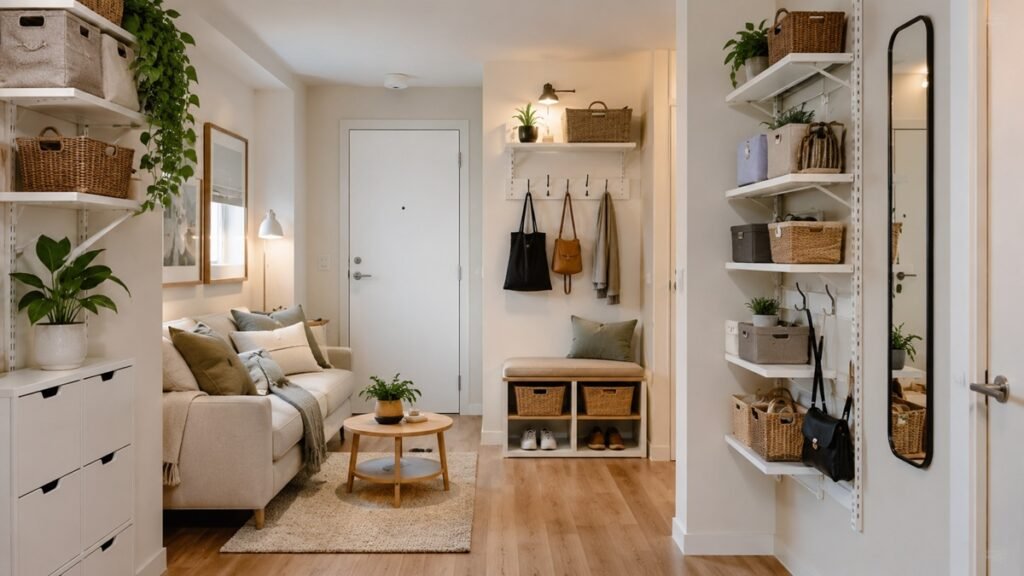
These small apartment storage ideas will help you organize your space without making it feel crowded or complicated.
1. Start by Removing What You Do Not Use
Before adding new storage, start by removing items you no longer use. Small apartments can become crowded quickly when every drawer, shelf, and closet holds things that do not serve a clear purpose.
Look for items that are:
- Broken or damaged
- Duplicate items
- Expired products
- Clothes you no longer wear
- Old paperwork you do not need
- Kitchen tools you rarely use
- Decorations that only collect dust
Decluttering first makes storage easier. If you skip this step, you may end up organizing things you do not actually need.
For a simple routine that keeps clutter from building up again, you can use our weekly reset routine for your home, desk, and digital life.
2. Use Vertical Space
When floor space is limited, vertical space becomes very useful. Walls, doors, tall shelves, and high storage areas can help you store more without crowding the room.
Vertical storage ideas include:
- Tall bookshelves
- Wall-mounted shelves
- Over-the-door organizers
- Hooks on walls or doors
- Stackable storage bins
- Hanging baskets
- Floating shelves
Use vertical storage carefully. Too many shelves or wall items can make a small apartment feel busy. Choose a few useful areas instead of covering every wall.
The goal is to create storage that helps the room feel more open, not more crowded.
3. Choose Furniture With Built-In Storage
Furniture with built-in storage can be very helpful in a small apartment. It gives you useful storage without adding extra furniture pieces.
Good options include:
- Storage ottoman
- Bed frame with drawers
- Coffee table with storage
- Bench with hidden storage
- Nightstand with drawers
- Sofa with storage compartment
- Desk with shelves or drawers
Before buying storage furniture, think about what you need to store. A storage ottoman may be useful for blankets, while a bed with drawers may be better for clothes, linens, or seasonal items.
Try to avoid furniture that is too large for the room. Storage furniture should make your apartment more useful, not make it harder to move around.
4. Create an Entryway Drop Zone
Even a small apartment needs a place for everyday items when you come home. Without a drop zone, keys, bags, shoes, mail, and small items may spread across tables and counters.
A simple entryway drop zone may include:
- A small tray for keys
- Hooks for bags or jackets
- A shoe rack
- A basket for accessories
- A mail holder
- A small bench if space allows
If you do not have a real entryway, use a small section near the door. Even one hook and one tray can make a difference.
The purpose of a drop zone is to stop clutter before it enters the rest of the apartment.
5. Use Clear Bins for Hidden Storage
Clear bins can help you see what you have without opening every box. They are useful for closets, shelves, cabinets, and under-bed storage.
You can use clear bins for:
- Seasonal clothes
- Extra toiletries
- Office supplies
- Cleaning supplies
- Craft items
- Small electronics
- Backup household items
Use labels if the bins are not easy to see or if they are stacked. Clear bins are helpful, but labels make the system even easier to maintain.
Try not to fill every bin completely. A little extra space makes it easier to put things back.
6. Make Better Use of Closet Space
Closets in small apartments need to work hard. A closet can become much more useful when you divide it into zones instead of using it as one large storage area.
Closet storage ideas include:
- Shelf dividers
- Hanging organizers
- Stackable bins
- Over-the-door hooks
- Drawer units
- Slim hangers
- Labeled baskets
Group similar items together. For example, keep daily clothes in one section, seasonal clothes in another, and extra household items in bins.
If your closet is small, focus on easy access. Items you use often should be the easiest to reach.
7. Store Items Under the Bed
Under-bed storage can be useful in a small apartment, especially if closet space is limited. It works well for items you do not need every day.
Good items for under-bed storage include:
- Seasonal clothing
- Extra bedding
- Shoes
- Travel bags
- Holiday items
- Memory boxes
- Backup supplies
Use low bins, fabric storage bags, or drawers designed for under-bed storage. Choose containers that are easy to pull out and close.
Avoid using the space for random clutter. Under-bed storage should still have a clear purpose.
8. Use Hooks for Everyday Items
Hooks are one of the simplest storage tools for small apartments. They can hold everyday items without taking up drawer or shelf space.
You can use hooks for:
- Keys
- Bags
- Hats
- Jackets
- Headphones
- Towels
- Cleaning tools
- Reusable shopping bags
Hooks work well near doors, inside closets, on cabinet sides, or in small corners.
Use hooks where they solve a real problem. Too many hooks in visible areas can make the apartment feel cluttered, even if items are technically organized.
9. Add Storage to Your Desk Area
If you work or study from home, your desk area can easily collect clutter. Papers, cables, notebooks, pens, and chargers can take over a small apartment if they do not have a clear place.
Simple desk storage ideas include:
- A small drawer unit
- A desktop tray
- A monitor stand with storage
- A pen cup
- A wall shelf above the desk
- A rolling cart
- A file box for papers
Keep daily items near your desk and store backup supplies somewhere else. This helps your workspace stay useful without becoming crowded.
If your workspace is still being set up, start with our small home office setup checklist. For limited desk space, see our guide on how to organize a small desk.
10. Use a Rolling Cart
A rolling cart can be useful because it is flexible. You can move it where you need it and store it away when you do not.
A rolling cart can hold:
- Office supplies
- Cleaning supplies
- Craft supplies
- Pantry items
- Bathroom products
- Baby or pet supplies
- Daily planning tools
The best use for a rolling cart is a group of items that belong together. For example, a home office cart can hold notebooks, pens, chargers, folders, and extra supplies.
Try not to turn the cart into a random storage shelf. Give it one main purpose.
11. Organize Kitchen Cabinets by Use
Small apartment kitchens often have limited cabinets and counters. Organizing by use can make the kitchen easier to maintain.
Group items by category, such as:
- Cooking tools
- Baking supplies
- Food storage containers
- Everyday dishes
- Coffee or tea supplies
- Pantry items
- Cleaning supplies
Keep the items you use most often in the easiest places to reach. Store rarely used items higher, lower, or farther back.
Use small bins or shelf risers to separate categories inside cabinets.
12. Keep Counters as Clear as Possible
Clear counters can make a small apartment feel more spacious. This is especially true in kitchens, bathrooms, and desk areas.
Keep only daily-use items on counters. Store occasional items in cabinets, drawers, or bins.
Common items that may not need to stay on the counter include:
- Extra appliances
- Backup toiletries
- Stacks of paper
- Unused containers
- Decorations that take up too much space
- Duplicate tools
Clear counters are easier to clean and make the room feel less crowded.
13. Use Door Storage
Doors are often unused storage spaces. Over-the-door organizers can help store small items without using floor space.
Door storage can work in:
- Bedroom closets
- Bathroom doors
- Pantry doors
- Laundry areas
- Utility closets
- Entry closets
You can use door storage for shoes, accessories, toiletries, cleaning supplies, pantry items, or small tools.
Make sure the organizer does not stop the door from closing properly. Also avoid making the door too heavy or difficult to use.
14. Create Storage Zones
Storage zones make a small apartment easier to manage. Instead of storing items wherever they fit, group them by purpose.
Common storage zones include:
- Entryway items
- Cleaning supplies
- Office supplies
- Paperwork
- Kitchen items
- Bathroom products
- Seasonal items
- Tools and repairs
When each category has a zone, it is easier to find items and put them back.
This also helps you notice when you have too much of one category.
15. Avoid Buying Storage Before Measuring
Storage products can be helpful, but only if they fit your apartment. Before buying bins, shelves, carts, or organizers, measure the space where you plan to use them.
Measure:
- Closet width and depth
- Shelf height
- Under-bed clearance
- Cabinet dimensions
- Desk space
- Door clearance
- Wall space
Buying the wrong size storage can create more clutter instead of solving it.
It is better to measure first, then choose storage that fits the actual space.
16. Small Apartment Storage Checklist
Use this checklist when organizing storage in a small apartment.
Declutter First
- Remove broken items
- Donate or move items you no longer use
- Recycle old papers and packaging
- Reduce duplicates
- Clear expired products
Entryway
- Add a tray for keys
- Use hooks for bags or jackets
- Create a simple shoe area
- Use a small basket for accessories
- Control incoming mail
Closet
- Group similar items together
- Use slim hangers
- Add shelf dividers if needed
- Use bins for seasonal items
- Keep daily items easy to reach
Bedroom
- Use under-bed storage
- Choose nightstands with storage
- Keep surfaces simple
- Store seasonal items away
- Use hooks or baskets carefully
Kitchen
- Group items by use
- Keep counters clear
- Use shelf risers
- Store rarely used items higher or farther back
- Use bins for small pantry items
Desk Area
- Keep only daily essentials nearby
- Use a small tray or organizer
- Store extra supplies away from the desk
- Manage cables
- Create a simple paper system
Maintenance
- Reset surfaces weekly
- Return items to their zones
- Review storage bins regularly
- Avoid filling every empty space
- Measure before buying new storage
Common Small Apartment Storage Mistakes
Small apartment storage works best when it supports your daily habits. Try to avoid these common mistakes.
Buying storage before decluttering
Storage is more useful after you remove what you do not need. Otherwise, you may only store clutter more neatly.
Using every empty space
Just because a space can hold something does not mean it should. Leaving some empty space can make your apartment feel calmer.
Choosing storage that is too large
Oversized shelves, bins, or furniture can make a small apartment feel crowded. Choose storage that fits the room.
Keeping daily items hard to reach
Items you use often should be easy to access. If your system is inconvenient, you probably will not maintain it.
Ignoring vertical space
Walls, doors, shelves, and tall furniture can help when floor space is limited.
Not resetting regularly
Even a well-organized apartment needs maintenance. A short weekly reset can keep clutter from building up again.
Final Thoughts
Small apartment storage does not need to be complicated. Start by removing what you do not use, then create simple storage zones for the items that matter most.
Use vertical space, clear bins, hooks, under-bed storage, closet organizers, and furniture with built-in storage when they solve a real problem.
The best small apartment storage system is not the one with the most bins or shelves. It is the one that makes your home easier to use, easier to clean, and easier to enjoy every day.